My work
Everything here is real and dated. Where there is outside proof, I link to it.
Software for the U.S. Air Force
An electronic warfare squadron uses a ticket system to report problems and send them up the chain. I owned every AI feature in it.
- Found and fixed a high-severity security flaw that let people read records they should not have been able to see. I also removed a secret key that had been written into the code.
- Built automatic summaries, duplicate detection, and search, designed so an AI failure can never stop someone from filing a ticket.
- Wrote a 2,000-line testing system that scores how accurate those features are, with written methods so anyone can repeat the results.
- Delivered the original single sign-on for the system, and limits on which files each unit can upload.
Tools: TypeScript, Node, PostgreSQL, role-based access control, single sign-on, Google Gemini.
Security background
- CompTIA Security+ (SY0-701), 2025
- U.S. citizen, TS/SCI clearance eligible
- Department of Defense training in controlled information, insider threat, and security clearances
- Trained on OWASP Top 10, Wireshark, Nmap, Metasploit, and Burp Suite
- Cybersecurity Scholar in VICEROY, funded by the Air Force Research Laboratory
Research: AI that keeps working on damaged hardware
The problem. Military AI is a glass cannon. It is very accurate on perfect computer chips, but it breaks down when those chips wear out from heat, radiation, or manufacturing defects. Aircraft that fly on their own cannot count on perfect chips.
What I did. I tested a different kind of AI, called hyperdimensional computing, against a standard neural network. Both had to recognize radio signals while I simulated chips with more and more damage.
The honest part. My first approach did not work. The public write-up includes that failure and how I changed course.
Accuracy lost when 20 percent of the chip is damaged
Measured in accuracy points. A shorter bar is better.
About 20 times more resilient.
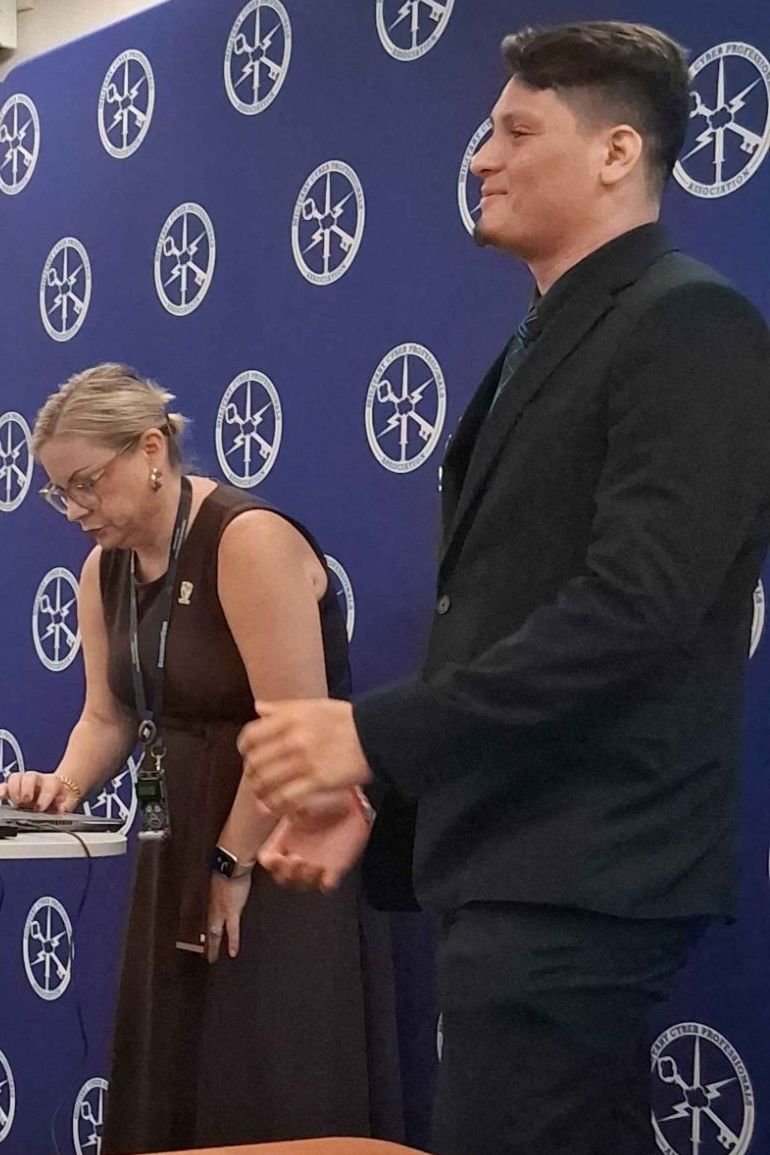
- 2nd place, student research poster competition, VICEROY Symposium, William & Mary, April 2026. University news page
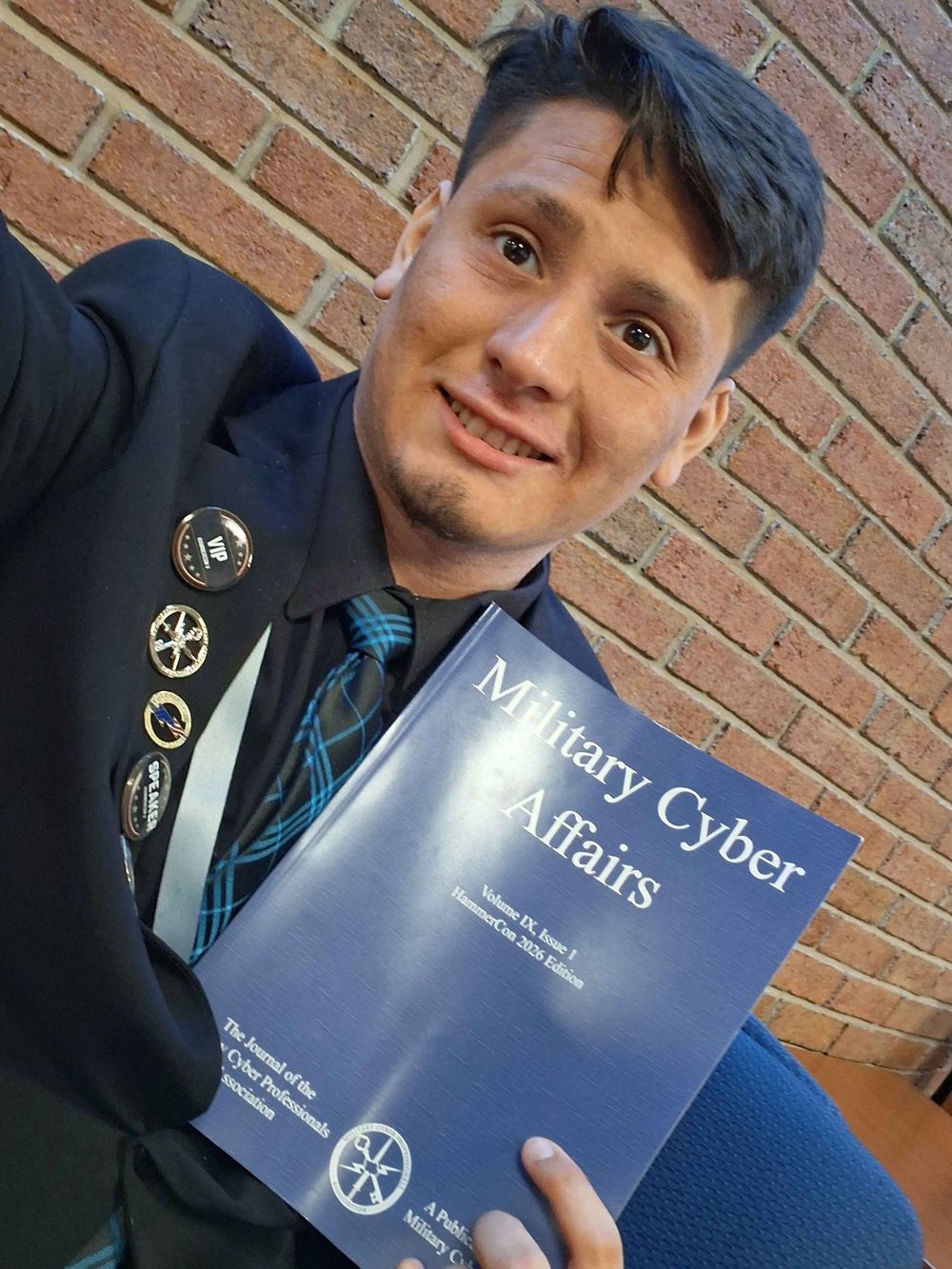
- Published in Military Cyber Affairs, Vol. 9, Issue 1, 2026. Read the paper
- Presented on the Stars track at HammerCon 2026, September 24, where I was a VIP guest
Earlier research, all public
- Ariadne. Compared two kinds of AI on reasoning puzzles. The standard model scored under 1 percent on longer problems, while mine scored 100 percent on one type. See the project
- Itera-Lite. Made an AI model 2.27 times smaller and 1.24 times faster than a standard design. See the project
- Ambient Contextual AI. A private assistant that recognizes what is on your screen in under 200 milliseconds, without sending anything online. See the project
- Hyperion. An experimental AI memory that can be edited directly, without retraining. See the project
Websites
I handle the whole job: design, writing, building, hosting, the domain name, and email.
adriancisneros.dev
This site. Designed, written, built, and hosted by me, with a contact form that delivers to my inbox.
synthiq.app
The website for my software studio, with services, pricing, and a research section. Visit synthiq.app
A San Antonio nonprofit
A seven-page website built at no charge, from the organization's own brand guidelines, with easy-to-read colors and forms for volunteers and donations.
VICEROY cybersecurity resource site
More than 20 hands-on security labs, workshop guides, and event flyers for the program's students. See the resource site
Our Lady Queen of Heaven parish
Ran the parish website, and moved historical paper records into an online archive.
IEEE Lone Star Section newsletter
Automating a regional newsletter so it pulls in events on its own and looks right in every email program.
More software I have shipped
- CoreArch. A simulator that shows how a computer processor runs instructions, step by step. Free to use.
- Prompt Vault. A browser extension for saving and organizing AI prompts.
- Video editing assistant. A tool that lets AI watch and edit video frame by frame. It runs my daily video system.
- Agent Maker. A tool with a dashboard for building AI assistants. See the project
- Arm migration tool. Moves AI workloads to Arm processors, with measured speed results. See the project
- STRATA. A fighting game built for the VelociCode 2026 game jam.
- Machine learning workshop. Classification and clustering at 98.6 percent accuracy, run on a university supercomputer.
Film and video
Short films I direct, videos my own software makes, and single shots. Videos play without sound. Where a clip has sound, a Turn sound on button sits under it.
Films I directed
Videos my software makes on its own
A system I wrote reads an article, writes the script, makes the video, and publishes it.
How water moves
A science article turned into a short.
A second example
Same system, a different subject.
Single shots
Individual clips, useful for product adverts and close-up detail.
Hummingbird
Motion and natural light.
Clock close-up
Fine detail and texture.
Product in hand
The style used for product adverts.
My channels
- Synthiq Labs. My main channel. It runs mostly on its own: an article becomes a video and publishes daily.
- MAGNETIC VALENTINE. Horror shorts I direct myself. See one on YouTube